
Services
Tools for the robot. Software to run it. One cell that works.
We engineer the tools, fixtures, controls and software that turn an industrial robot into a capable manufacturing cell. Choose one service, or let us deliver the complete solution.
4
service lines that work as one system
1
partner from concept to commissioning
What we offer
Four services. One capable cell.
Service 01
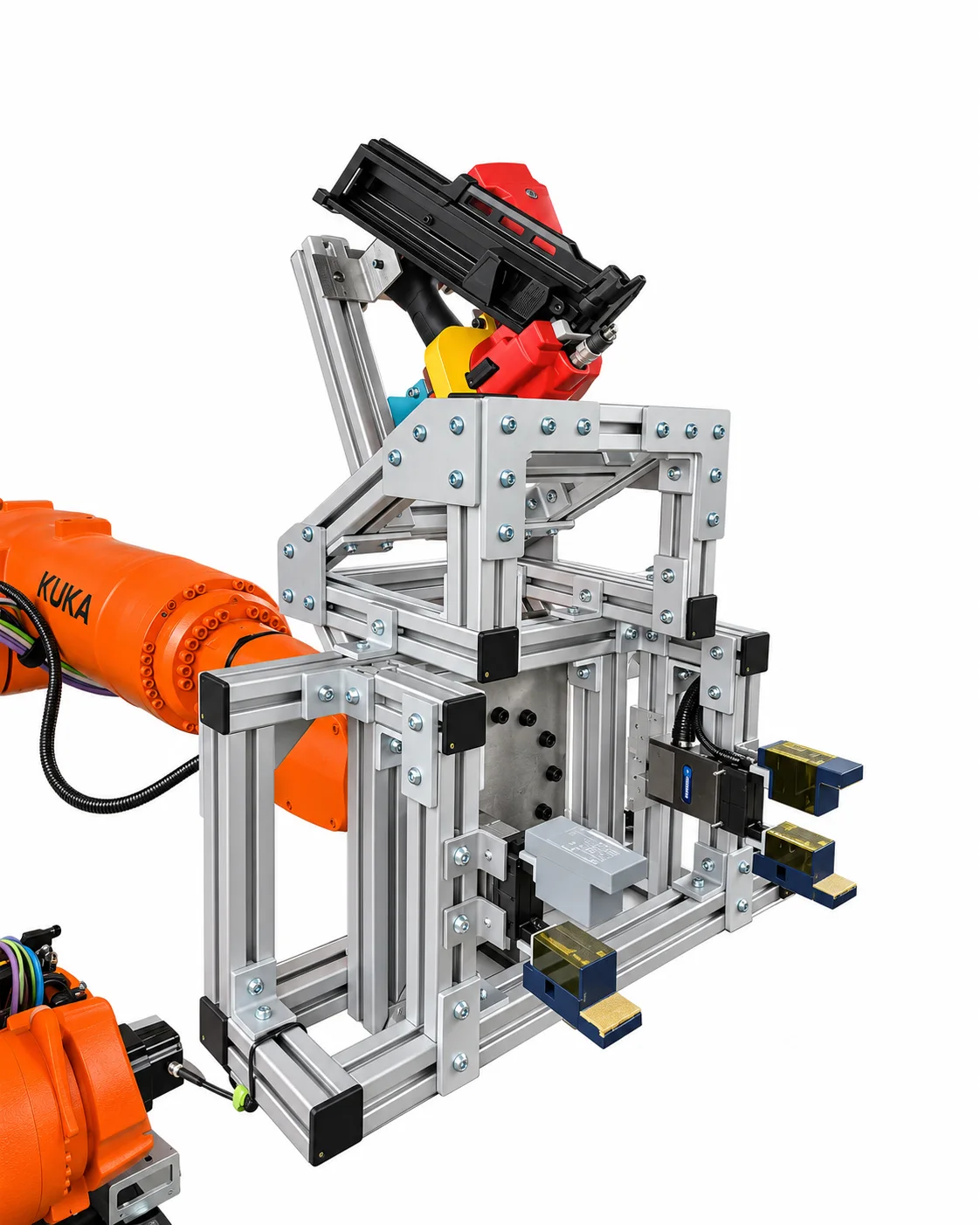
Robotic tools and fixtures that do more than hold.
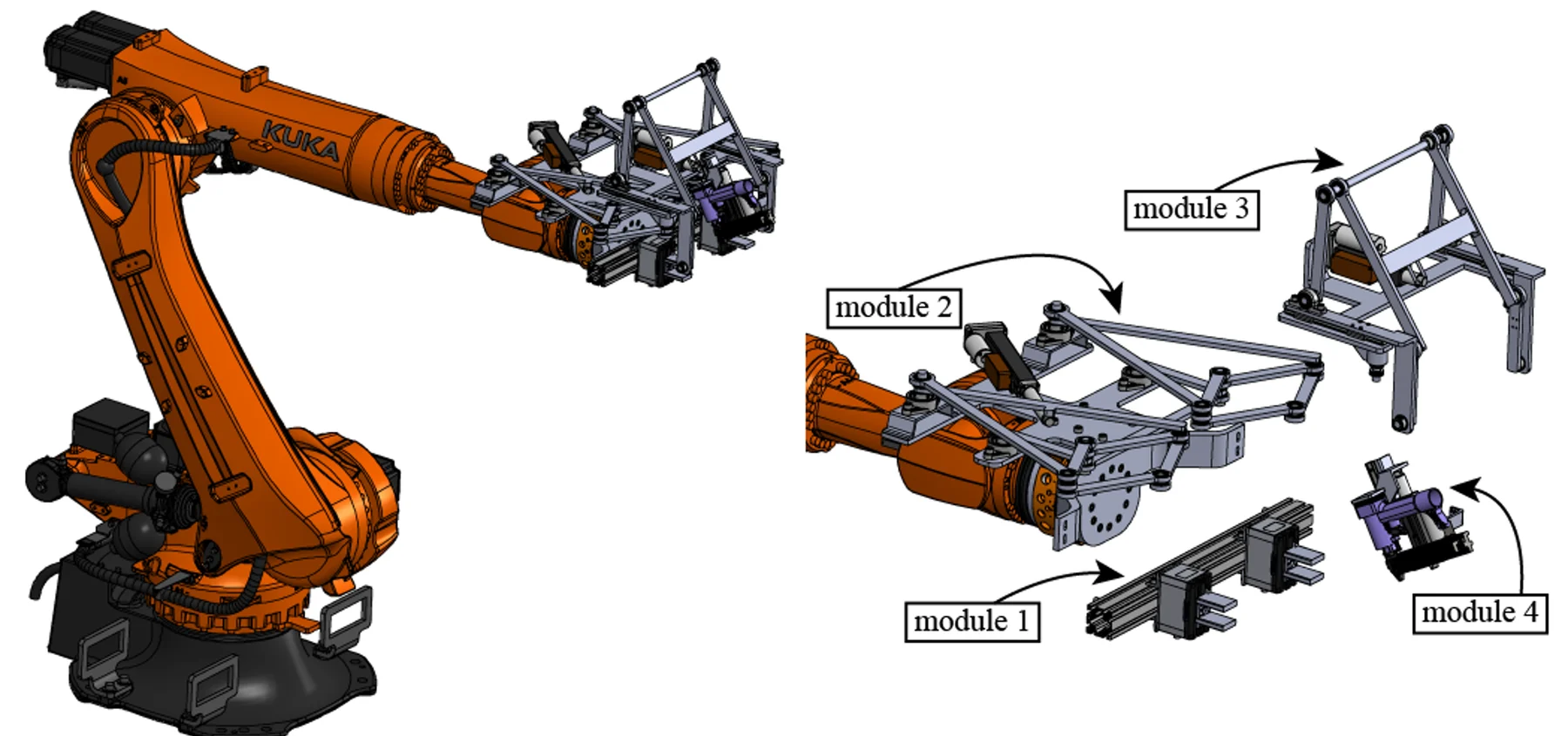
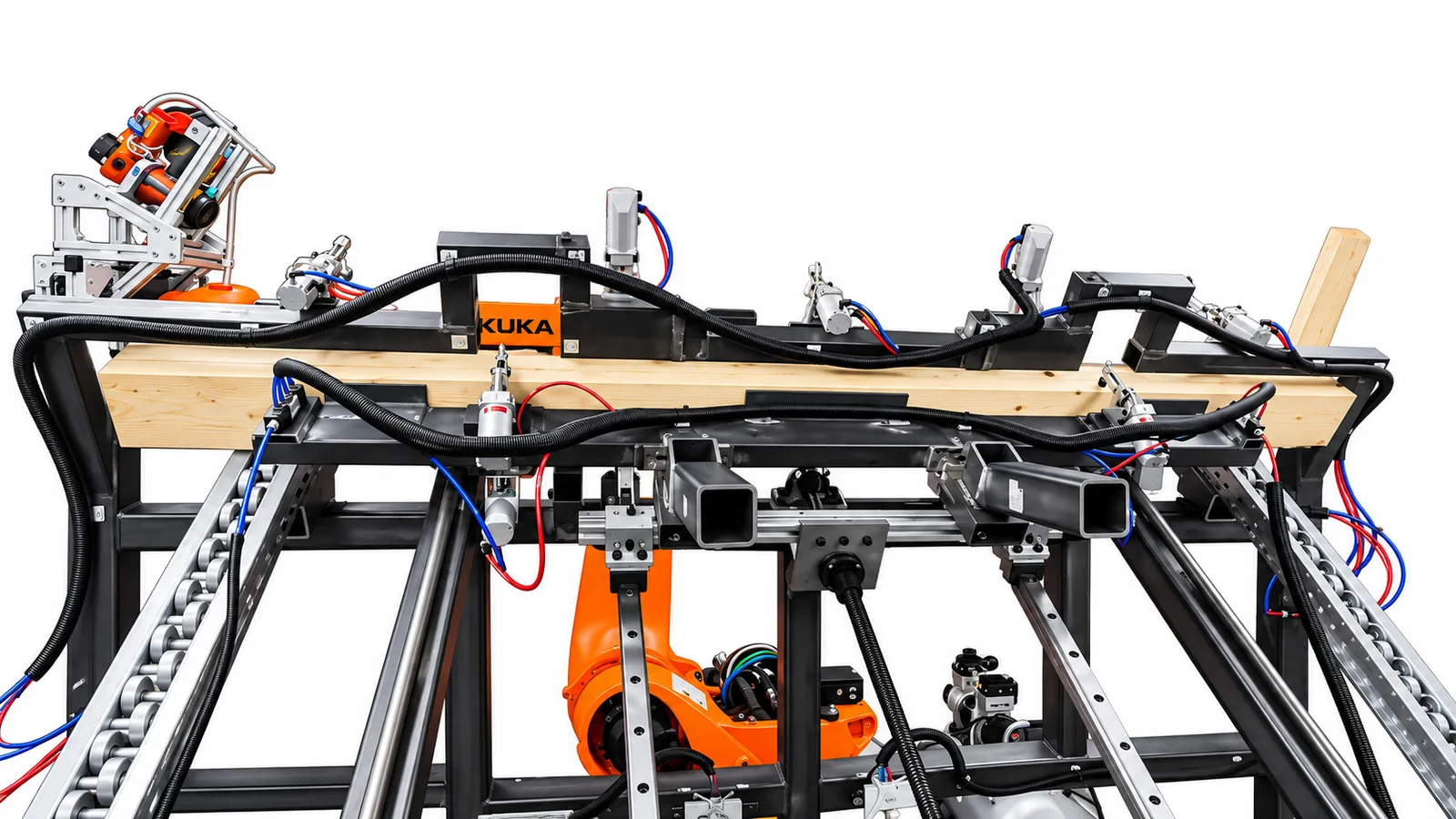
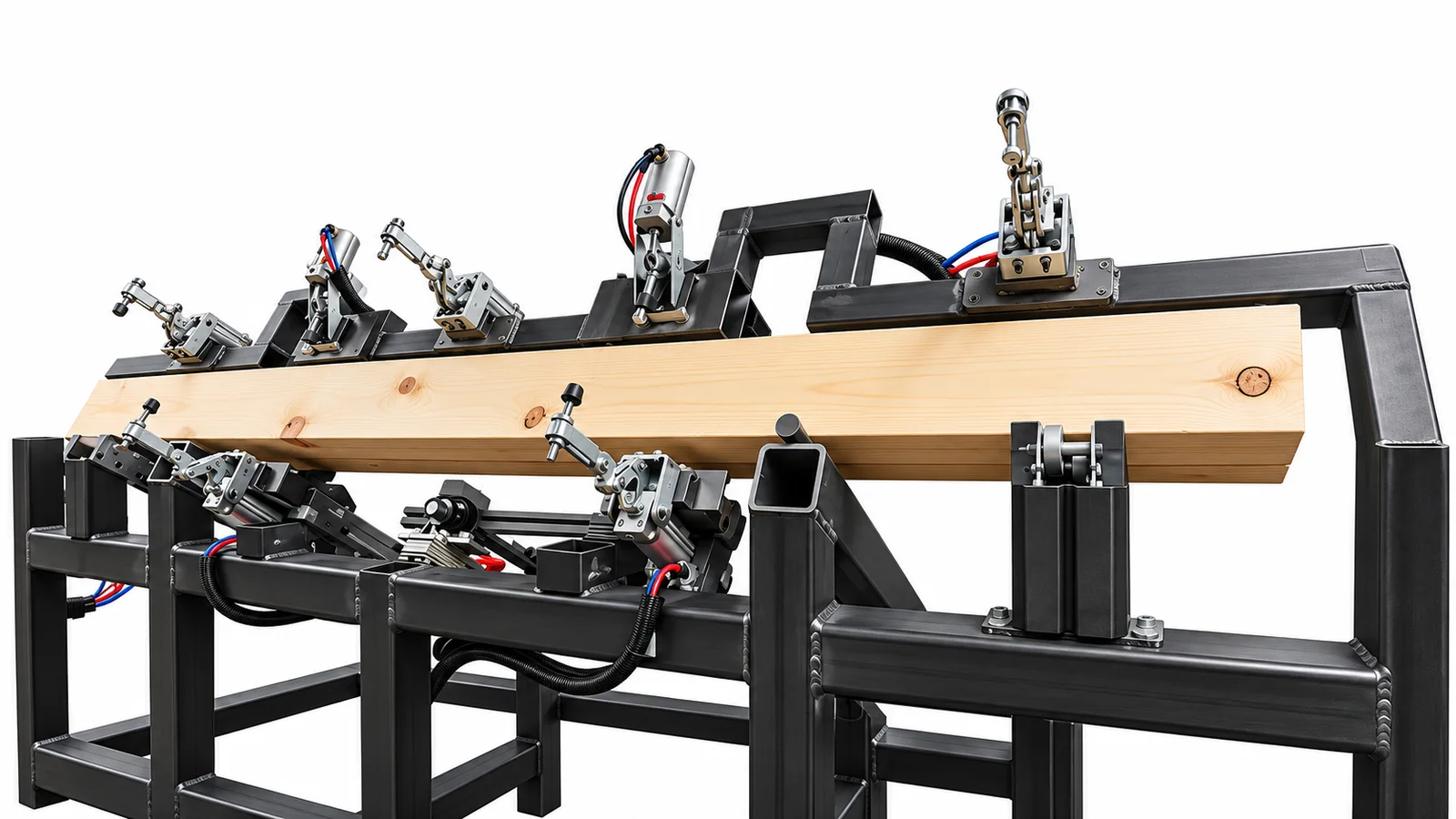
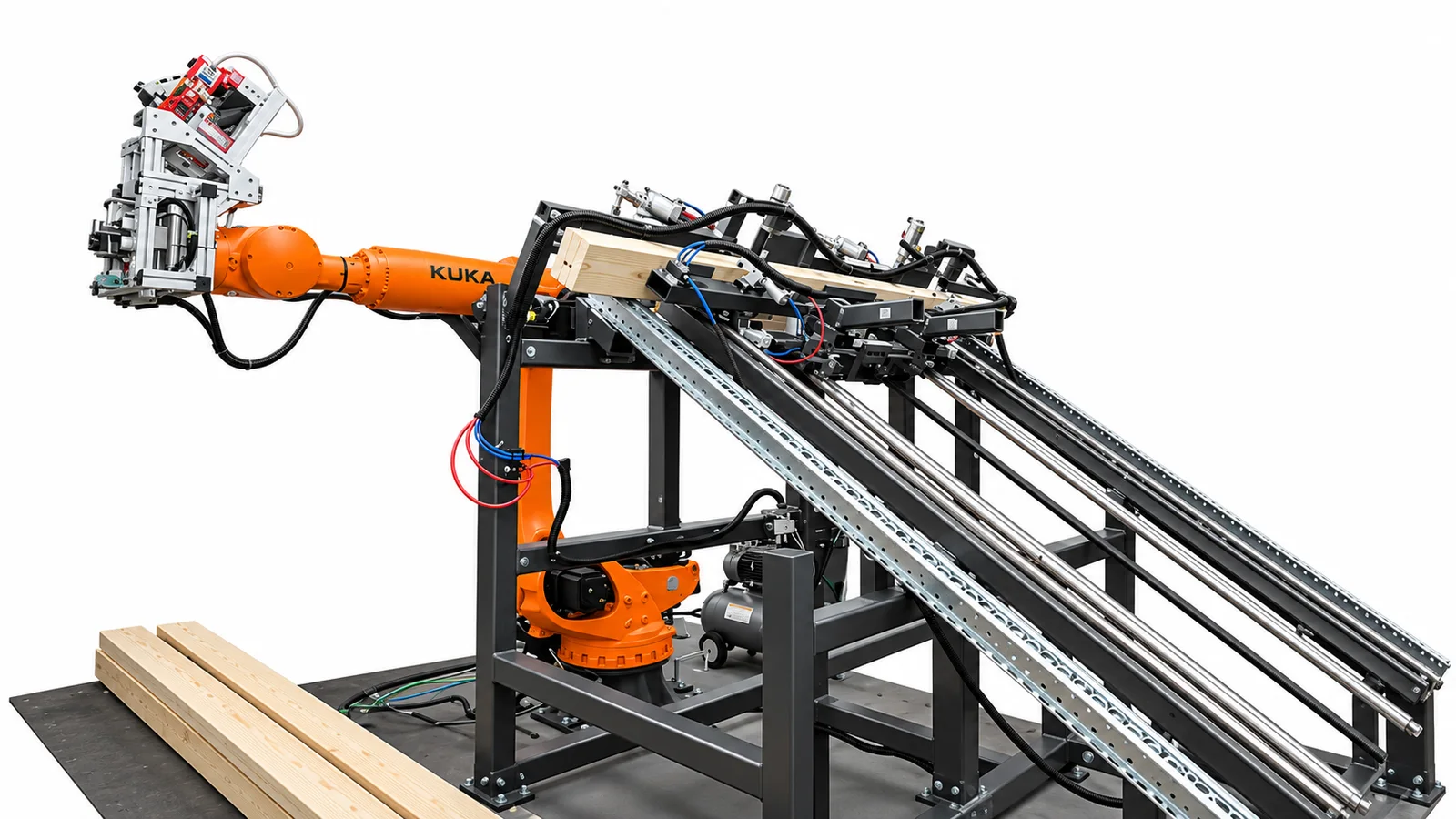
The end effector is where the robot meets the material, and the fixture is where the work takes shape. We design both as one system: tools that grip, position and fasten in a single sequence, and automatic tables and fixtures that receive, hold and advance the part so every operation is repeatable.
What we deliver
- Multi-function and mobility-added end effectors
- Modular, interchangeable grippers and tools
- Automatic tables, positioners and fixtures
- Pneumatic and electric clamping systems
- Mechanism design, simulation and validation
- Manufacturing, assembly and testing
Typical applications
Service 02
Software that makes robots easier to use.
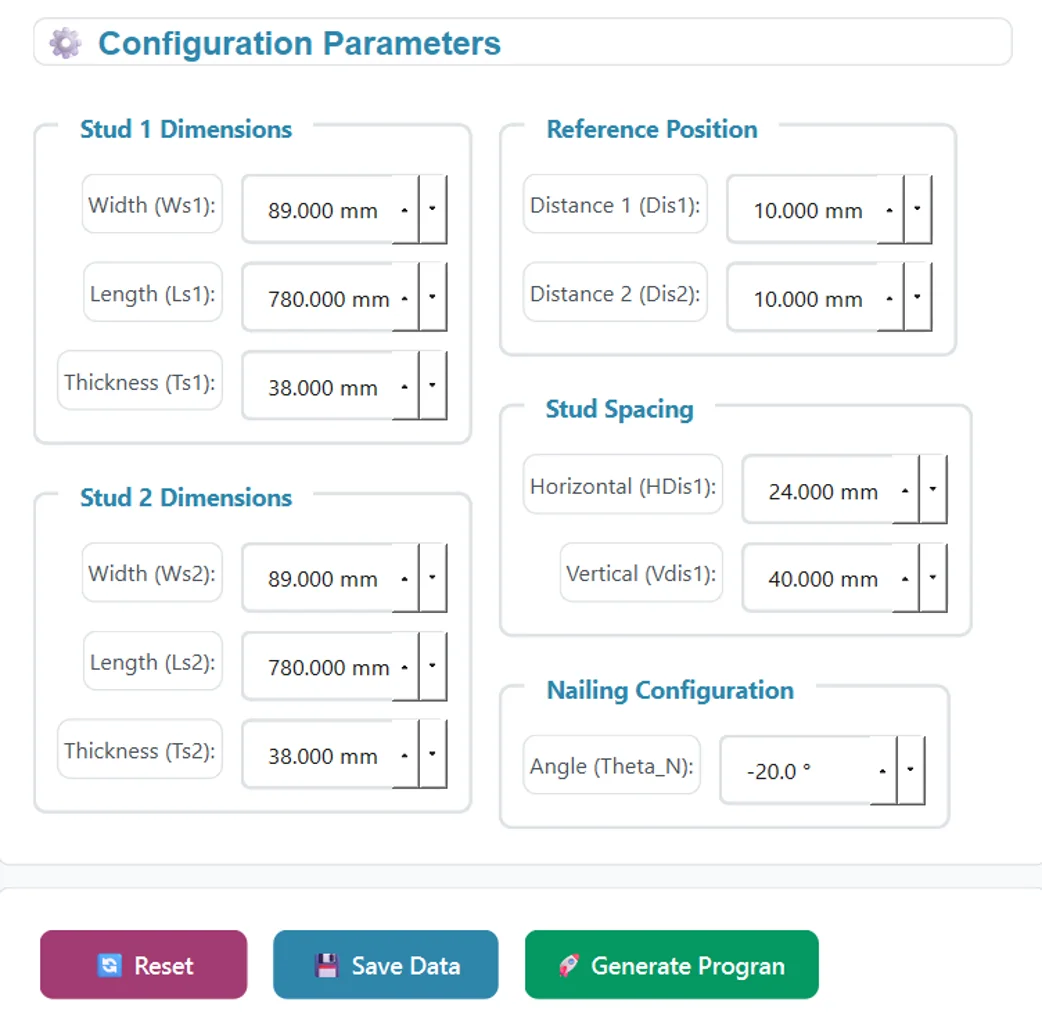
Industrial robots are powerful but hard to program. We are developing Axora Studio, our own software that turns part dimensions and assembly rules into robot programs ready to run, and connects the robot with PLCs, tools and operators.
What we deliver
- Automatic robot program generation
- Applications to control robots and tools
- Communication between robots, PLCs and PCs
- Operator interfaces and dashboards
- Data logging for process and quality
- Custom tools built around your workflow
Typical applications
Axora Studio
In development01 →
Part data
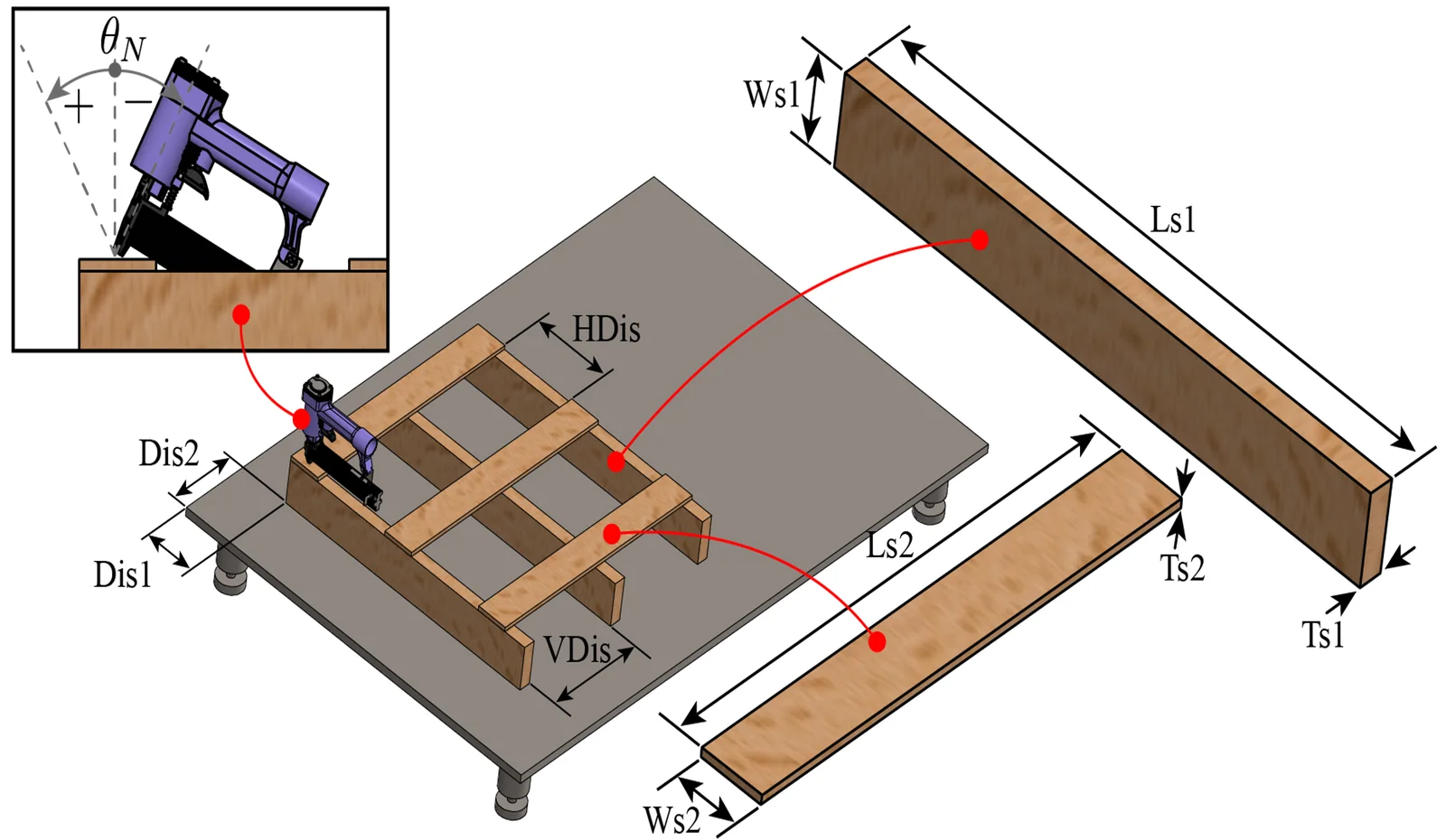
Dimensions, spacing, nail angle
02 →
Axora Studio
Generates paths and sequence
03 →
Robot program
KUKA program ready to run
04
Robotic cell
Robot, tools and fixtures
From part data to a robot program in one step, without writing robot code by hand.
Service 03
Digital twins that see before you build.
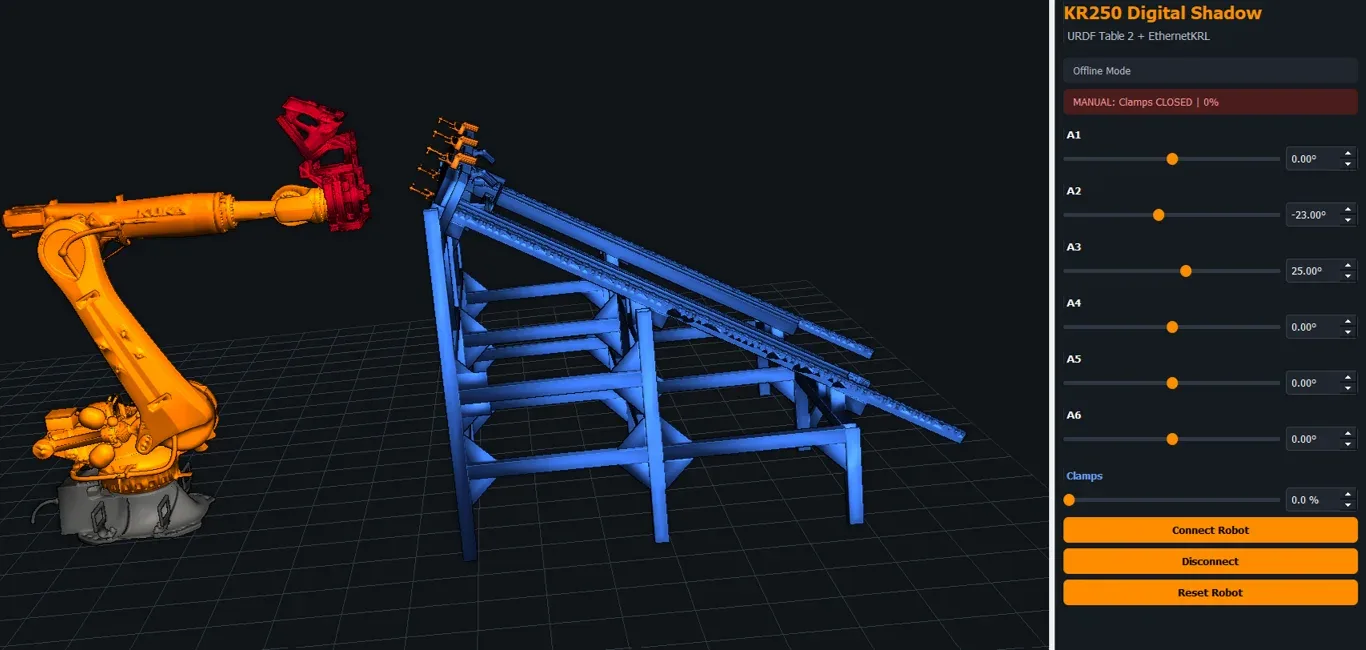
A digital twin is a virtual copy of the robot, its tools and the equipment around it. We use it to plan and validate every motion before anything moves, and to connect the model with the real cell so it can follow the process as it runs.
What we deliver
- 3D cell models from CAD and robot data
- Layout, reach and cycle studies
- Motion planning and collision checks
- Live connection to the robot and PLC
- Dashboards for process monitoring
- Data foundation for quality control
Typical applications
Service 04
Integration into one working cell.
Great tools only pay off when they work together. We connect the robot, end effectors, fixtures, sensors and software under one PLC based control architecture, then commission the cell and refine it with you until it runs reliably.
What we deliver
- PLC programming and control architecture
- Robot and PLC communication and handshakes
- Pneumatic valves, motor drives and sensors
- Operator panels and HMI
- Interlocks and safe operating sequences
- Commissioning, testing and documentation
Typical applications
Projects
What we have built.
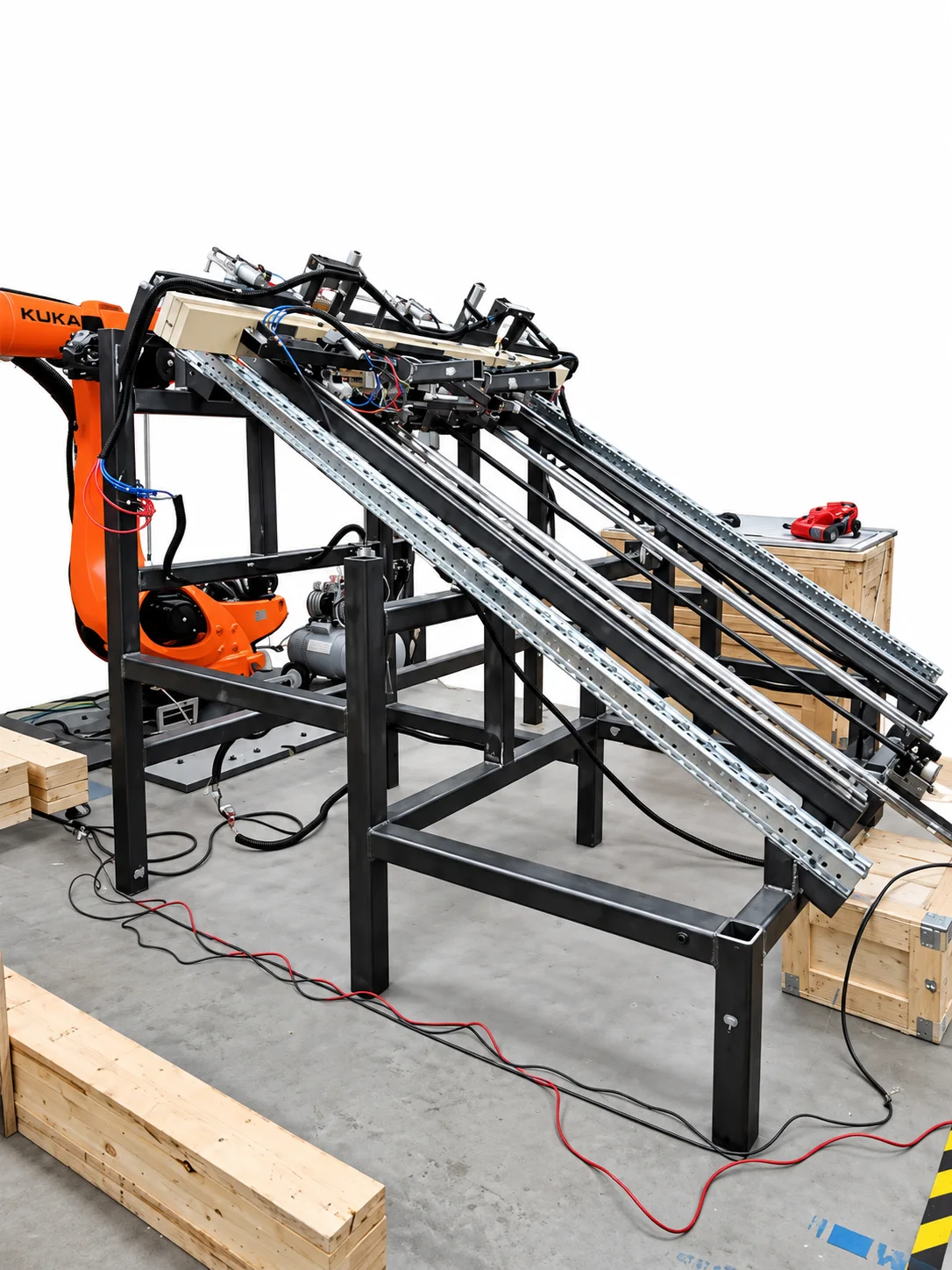
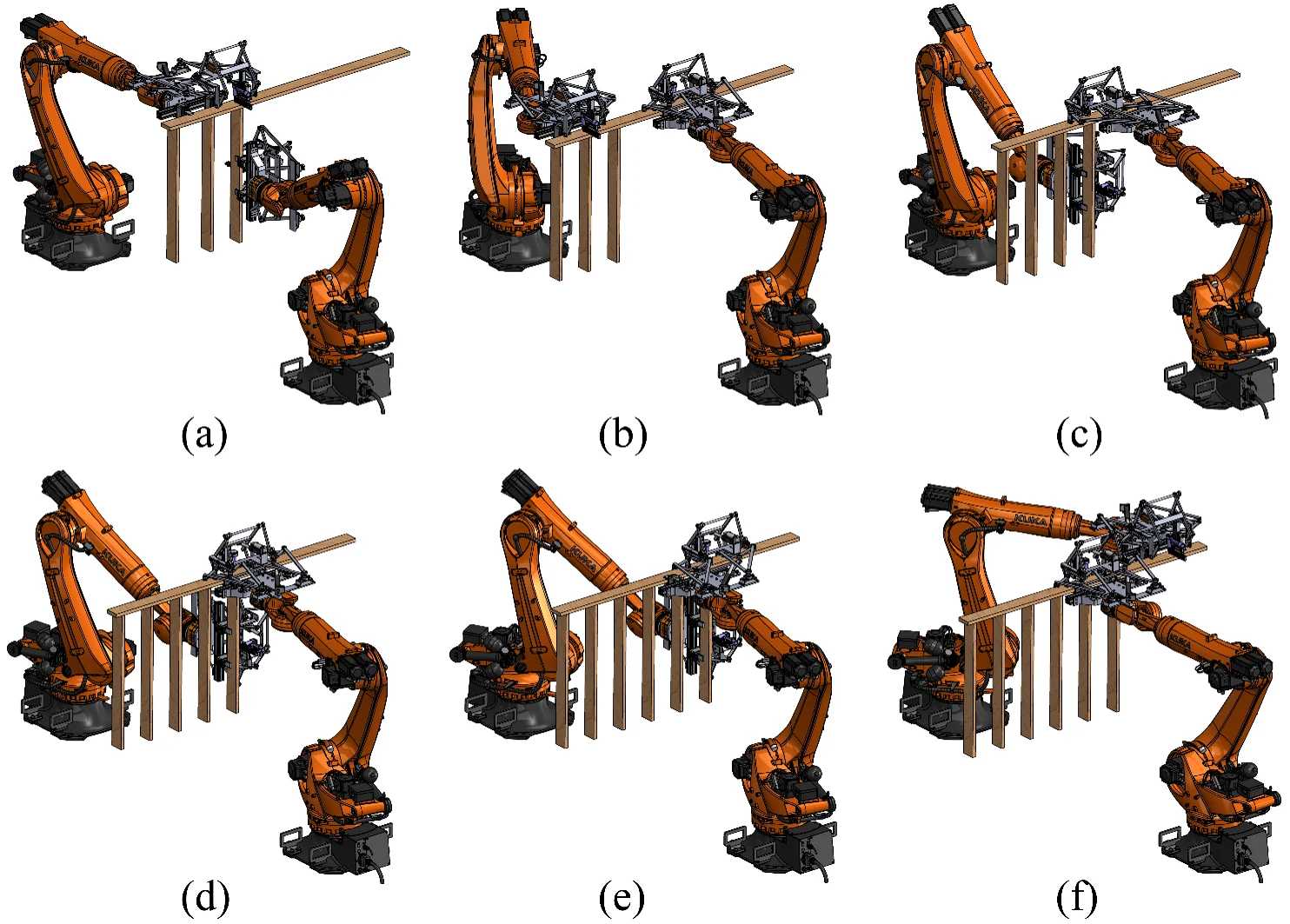
Each project started from a manufacturing task and ended as working hardware and software. Together they show the range of tooling we can develop for you.
How we work
We start with your task, not with a catalog.
01
Understand the task
We study your component, materials, assembly sequence and production constraints.
02
Design the tools
We engineer the tools, fixtures, software and digital model around the operations they must perform.
03
Build and integrate
We manufacture, assemble and commission the cell, then test and refine it with you.
Have a task your robot can’t do yet? Let’s talk about it.
Discuss your project